Lush Landscapes on a Water Budget: Navigating Metro Denver Drought Restrictions
A Guide to Keeping Your Yard Alive and Beautiful with Less
Summers in the Denver Metro area bring beautiful sunny days, spectacular mountain views, and the inevitable challenge of managing a landscape under semi-arid conditions. With municipal water providers across the Front Range strictly enforcing conservation measures, maintaining curb appeal requires a strategic shift in perspective.
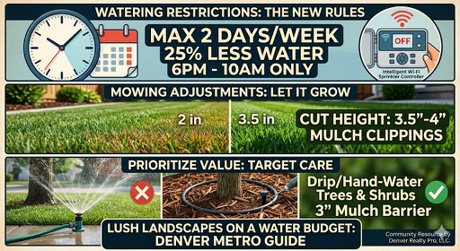
Most Denver metro municipalities currently limit outdoor irrigation to just two days per week. Furthermore, on those allowed days, homeowners are required to use 25% less water than standard operating levels. Managing this tighter budget is essential to preventing both lawn stress and hefty city fines. Here is how you can achieve a healthy yard while respecting our shared water resources.
1. Timing & Frequency: Programming for Survival
When you are restricted to watering twice a week, every drop must count. Standard midday watering loses an immense percentage of volume directly to evaporation and high winds. To combat this, adhere strictly to these timing practices:
- The Sunrise Window: Water exclusively between 10 PM and 6 AM. Watering just before dawn allows moisture to deep-soak into the root zone before heat and wind pick up.
- The "Cycle and Soak" Method: Instead of running a sprinkler zone for a continuous 20 minutes (which leads to heavy runoff on Colorado's tight clay soils), break it into two 10-minute cycles spaced an hour apart. This gives the soil time to actually absorb the volume rather than allowing it to pool and run down the gutter.
2. Mowing Adjustments: Let It Grow
One of the easiest and most cost-effective ways to buffer your lawn against drought is changing how you interact with your lawnmower. Taller grass means deeper roots and better natural shade for the soil bed.
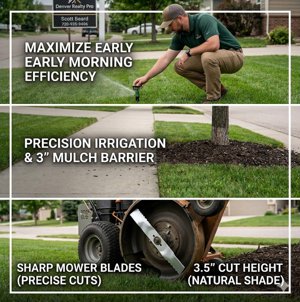
- Raise the Deck: Set your mower blade height to 3.5 or 4 inches. Taller grass blades cast longer shadows on the soil, dropping ground temperatures significantly and locking in that limited moisture.
- Keep Blades Sharp: Dull mower blades shred the tops of the grass rather than cutting cleanly, leaving jagged edges that turn brown and bleed moisture rapidly. Clean cuts minimize plant stress.
- Mulch the Clippings: Never bag your grass clippings during a drought. Leave them on the lawn to act as a micro-mulch layer that helps retain soil moisture and returns natural nitrogen to the turf.
3. Targeted Plant & Shrub Care
Your lawn can recover from a period of heat-induced dormancy, but deeply stressed trees and ornamental shrubs can suffer permanent damage or die outright. Prioritize your landscape investments wisely:
- Mulch Aggressively: Ensure all flower beds and tree rings have a clean, 3-inch thick layer of organic wood mulch. Wood mulch reduces ground evaporation by up to 70% while insulating roots from extreme heat. (Keep mulch pulled a few inches away from the actual tree bark to prevent rot).
- Hand-Watering Exemptions: Remember that most municipal restrictions allow hand-watering of trees, shrubs, and perennial gardens with a shut-off nozzle on any day of the week. Use a deep-root watering needle or a slow trickle from a hose for your mature trees.
4. Tuning Your Irrigation System
A 25% reduction in water volume means you cannot afford to waste a drop on concrete. Turn your system on manually once a month to audit performance:
- Fix Broken Heads: Replace cracked casings or missing nozzles immediately. A single broken sprinkler head can waste thousands of gallons in a single week.
- Adjust the Overspray: Ensure sprinkler heads are throwing water directly onto the grass, not onto your driveway, sidewalk, or street.
- Convert to Drip: For garden beds and ornamental zones, switch from spray heads to subsurface drip irrigation. Drip systems deliver water directly to plant roots, experience virtually zero evaporation, and are generally exempt from strict day-of-week regulations.


