
CHAF's "Schools to Home" Program Makes Home Ownership More Accessible
Teaching is a calling, but in today’s Colorado housing market, finding a home close to the school you serve can feel like an uphill battle. Rising home prices and competitive markets across the Denver metro area have forced many educators to commute long distances, living far from the communities where they invest their days.
That narrative is starting to shift.
Launched by the Colorado Housing and Finance Authority (CHFA), the Schools To Home program is a game-changing state initiative designed specifically to help public school employees buy homes right where they work.
At Denver Realty Pro, we want to break down how this program works, who qualifies, and how it could help you secure keys to your next home.
What Is the CHFA Schools To Home Program?
The Schools To Home program is built to tackle one of the biggest hurdles for first-time and working home buyers: coming up with a competitive down payment and covering closing costs.
Instead of forcing buyers to scrape together savings or look solely at conventional financing options, this program provides a creative financial structure backed by an investment from Colorado’s Public School Permanent Fund.
How the Financing Works:
- The First Mortgage: You receive a standard, fixed-rate first mortgage loan to finance the core purchase of your home.
- The Second Mortgage (Assistance): The program layers on down payment and closing cost assistance through a second mortgage loan worth up to 25% of your first mortgage loan amount.
This substantial second-mortgage boost drastically lowers the cash-out-of-pocket required at closing, making homeownership much more attainable on an educator's salary.
Who is Eligible?
While exact requirements can vary based on your lender and specific financial profile, the program is generally tailored toward:
- Public School Employees: This includes teachers, administrators, and classified staff working in Colorado public school districts.
- First-Time Home Buyers (or those who haven't owned a home in the past three years, depending on standard CHFA criteria guidelines).
- Buyers meeting specific income limits and standard credit requirements set by CHFA participating lenders.
Why This Matters for the Denver Real Estate Market
For too long, rising property values in Denver, Aurora, Lakewood, and surrounding districts have pushed essential public servants out of city limits. By bridging the gap between buying power and closing costs, the Schools To Home program does two vital things:
1. Keeps Educators in the Community: Teachers can live, shop, and build equity in the neighborhoods they teach in, strengthening local school communities.
2. Eases the Down Payment Burden: Eliminates the years of waiting and saving that usually delay home purchases.
Ready to Explore Your Options?
Here is a comprehensive document checklist tailored for public school employees preparing to apply for a mortgage through CHFA programs like Schools To Home.
The Educator’s Home Loan Document Checklist
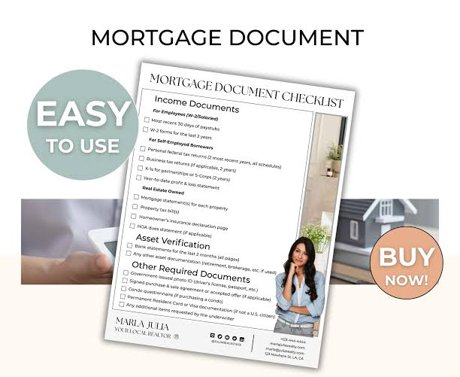
Getting your paperwork organized ahead of time is the best way to ensure a smooth underwriting process and lock in your financing without unnecessary delays. Because CHFA-backed programs combine a first mortgage with down payment/closing cost assistance, participating lenders will review standard financial verification along with proof of public school employment.
Use this checklist to gather everything you need before your initial lender consultation:
1. Proof of Income & Employment
· W-2 Forms: Copies from your two most recent tax years.
· Tax Returns: Federal tax returns (complete with all schedules) for the past two years.
· Pay Stubs: Your most recent consecutive pay stubs covering a full 30-day period.
· Employment Verification Letter / School District ID: A letter from your school district HR department verifying your position (e.g., teacher, administrator, or classified staff), hire date, and current salary status. (This is especially helpful for confirming program eligibility for educator-specific initiatives).
2. Asset & Down Payment Documentation
· Bank Statements: Full statements for all checking, savings, or money market accounts for the past 2 to 3 months (make sure to include all pages, even blank ones).
· Retirement/Investment Accounts: Most recent statements for any 403(b), 457(b), IRA, or investment accounts if you are utilizing them for reserves or supplemental funds.
· Gift Letters (if applicable): If family members are contributing funds toward your purchase, lenders require a standardized gift letter and a paper trail showing the transfer of funds.
3. Identification & Personal Documents
· Government-Issued Photo ID: A clear copy of your driver's license or passport for all borrowers.
· Social Security Verification: Proof of Social Security number (often verified via W-2s or tax returns, but keep your card or official documentation accessible).
4. Additional Property & Credit Items (Once Under Contract)
· Earnest Money Deposit Receipt: Proof of the earnest money deposit check cleared from your account once an offer is accepted.
· Explanation Letters: Brief, signed letters explaining any past credit inquiries, gaps in employment, or unique entries on your credit report if requested by the underwriter.
Pro-Tip for Denver Metro Educators
Because programs like Schools To Home involve specialized second-mortgage assistance funded through the Public School Permanent Fund, your lender will coordinate specific CHFA compliance forms alongside your standard loan application. Getting these documents gathered digitally in a single secure folder will make your pre-approval process seamless!
How The Process Works
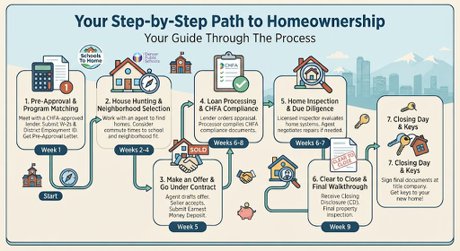
Here is a clear, chronological roadmap mapping out the home buying journey from pre-approval to closing day, tailored specifically for public school teachers navigating specialized programs like CHFA's Schools To Home.
Phase 1: Financial Pre-Approval & Program Matching
Week 1
Before you start shopping for neighborhoods, meeting with a lender who understands educator-specific programs is essential.
- What happens: You submit your income documentation, W-2s, and school district employment verification.
- CHFA Connection: Your lender evaluates your eligibility for the Schools To Home program, aligning your primary fixed-rate mortgage with the second-mortgage down payment and closing cost assistance. You receive an official pre-approval letter showing your true buying power.
Phase 2: House Hunting & Neighborhood Selection
Weeks 2–4
With your pre-approval in hand, you tour homes in the communities where you teach and live.
- What happens: Your real estate agent sets up tailored property tours, analyzes local comparable market values, and helps you identify homes that match your lifestyle and budget.
- Teacher Focus: Balancing commute times to your school district and evaluating long-term neighborhood equity potential.
Phase 3: Making an Offer & Going Under Contract
Week 5
Once you find the right property, it's time to secure it.
- What happens: Your agent drafts a competitive purchase contract. Once the seller accepts and signs, you officially go "under contract."
- Immediate Action: You submit your earnest money deposit (typically held in an escrow account) and kick off your contractual deadlines.
Phase 4: Loan Processing & CHFA Compliance Review
Weeks 6–8
This is where your financing file moves from pre-approval to formal underwriting.
- What happens: The lender orders an independent appraisal of the home to confirm its market value. Meanwhile, the loan processor packages your file alongside mandatory CHFA compliance documentation required for the Public School Permanent Fund assistance program.
- Your Role: Respond quickly if your loan officer requests any minor document clarifications or updated bank statements.
Phase 5: Home Inspection & Due Diligence
During Weeks 6–7
Protecting your investment through professional physical evaluation.
- What happens: A licensed inspector examines the home’s roof, foundation, plumbing, electrical, and HVAC systems.
- Resolution: Based on the findings, your agent may negotiate minor repairs or credits with the seller before your inspection contingency deadline expires.
Phase 6: Clear to Close & Final Walkthrough
Week 9
The finish line is in sight.
- What happens: You receive your official Closing Disclosure (CD) at least 3 days before closing, detailing your exact loan terms, final cash-to-close figures, and monthly payments.
- Walkthrough: You visit the property one last time right before closing to ensure it is in agreed-upon condition and any requested repairs were completed.
Phase 7: Closing Day & Handing Over the Keys
Week 10
The final step of the journey.
- What happens: You meet at the title company (such as Land Title) to sign your final loan documents, mortgage notes, and CHFA second-mortgage paperwork. Once the funds wire and the deed is recorded at the county, you receive the keys to your new home!
How Do I Get Started?
Navigating state-assisted mortgage programs can feel complex, but you don't have to do it alone. As your trusted local experts at Denver Realty Pro, we work hand-in-hand with CHFA-participating lenders to help you match these incredible programs with the right property.
Are you a public school employee wondering if you qualify? Contact Denver Realty Pro today for a no-pressure consultation, and let's map out your path from the classroom to your dream home!


