Search All Denver Metro Area Homes
Address Search

Frequently Asked Questions Regarding What Happens at a Home Closing
Q: When will I know how much money I need to bring to closing?
A: Whether you're financing your purchase with a mortgage or buying with cash, you'll receive a detailed breakdown of the costs before closing.
- Financed Purchases: Your lender and the title company will work together to calculate the final amount due. Once your loan is cleared to close, the lender provides the final figures to the title company. The title company then prepares a Closing Disclosure (CD), which outlines all fees for both the buyer and seller. The buyer's CD clearly states the amount due at closing, after your down payment and other fees are factored in. The seller's CD shows their net proceeds after paying off their existing mortgage, commissions, and other fees.
- Cash Purchases: Even without a lender, you'll still receive a Closing Disclosure. The title company will prepare this document, outlining all associated costs for both parties.
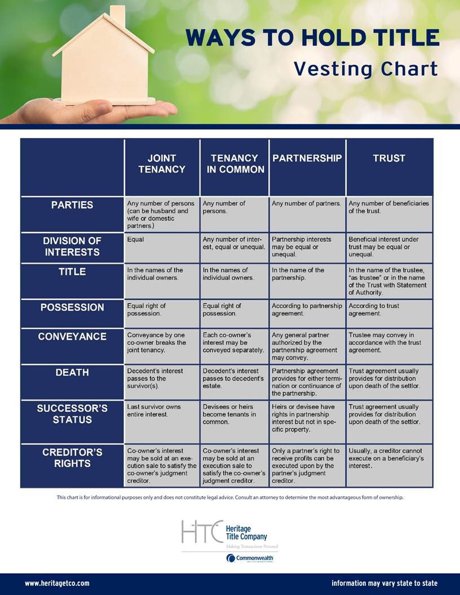
Q: What's the best way to hold title to my new property?
A: There are several ways to hold title, and the best option depends on your individual circumstances. We've created a helpful chart that explains the different options and their implications. We recommend discussing these options with your legal and financial advisors to determine the best fit for you.
Q: Should I have a pre-closing walkthrough?
A: Absolutely! A pre-closing walkthrough is crucial. It helps prevent surprises and ensures that the property is in the agreed-upon condition. Here's what to check:
- Included Items: Verify that all items included in the purchase contract (appliances, window treatments, etc.) are still on the property.
- Cleanliness and Condition: Check that the home is clean and that no new damage has occurred since your last visit. Sellers are typically responsible for leaving the property in broom-clean condition.
- Addressing Issues: If you find missing items or damage, these issues must be resolved before closing. This might involve repairs, financial compensation, or, in rare cases, a delay in the closing date. Your real estate agent will help you negotiate the best solution.
Q: What happens at the closing?
A: Closing is the final step in the home buying process. It's where ownership of the property officially transfers from the seller to you.
- The Title Company's Role: Closings are typically handled by a title company. They prepare all the necessary legal documents for the transfer of ownership.
- Signing Documents: Both the buyer and seller will sign numerous documents, finalizing the transaction.
- Key Exchange: After the paperwork is signed, you'll typically receive the keys to your new home, garage door openers, mailbox keys, and any relevant documents related to the property (appliance manuals, surveys, receipts, etc.).
- Possession: Possession of the property usually transfers to you after the closing is complete, although the exact time can be specified in the purchase agreement.
- Asking Questions: Closing is a good opportunity to ask the seller any remaining questions you have about the property.
We hope this FAQ has been helpful. If you have further questions about the closing process, please don't hesitate to contact us. We're here to guide you through every step of the home buying journey.
Address Search


Buying and Selling Made Easy
 Freshest Data Available
Active Listings Only
Customizable Search Options
New Listing Alerts
Instant Home Value Assessments

Explore Our Popular Cities
Buying and Selling a Home Information
:format(webp):quality(80)/u.realgeeks.media/rgtemplate/Market-Report-2.png)
Follow Us On Social Media


Senior Real Estate Specialist (SRES)
